
St. Petersburg Criminal History Checks
Choose the custodian by record type. St. Petersburg Police keeps offense, crash, and evidentiary material. PCSO creates the county booking. The Pinellas Clerk keeps the prosecution, while FDLE holds the statewide criminal-history layer.
- Request the city police report online, by mail, or at the SPPD counter.
- Use the report number, event date, location, and involved names to identify it.
- Search Pinellas arrest records for the jail booking.
- Search Pinellas court cases for filed charges and disposition.
- Use FDLE CCHInet when a broader Florida name search is needed for personal review.
No single St. Petersburg name search combines all five layers. Comparing official sources helps expose changed charges, delayed dispositions, and records held by another agency.
SPPD Records Counter Details
The SPPD Records Division operates at 1301 First Avenue North, St. Petersburg, FL 33705. The lobby is open from 6 a.m. to 8 p.m. daily. Records Counter hours are 8 a.m. to 4:30 p.m. weekdays, excluding holidays. Records assistance is 727-893-7537; department information is 727-893-7521 or 727-893-7555.
SPPD Records Division
1301 First Avenue North
St. Petersburg, FL 33705
727-893-7537
Weekdays, 8 a.m.-4:30 p.m., excluding holidays
The counter handles public requests, crash and offense reports, local clearance functions, court liaison work, and evidentiary records. Calling first helps confirm that a report is ready and releasable.
Records at St. Petersburg Police
The city records form can ask for the record category, report or case number, event date and time, location, involved names and roles, a clear description, preferred format, delivery method, contact route, attachments, certification, and cost approval. Florida law generally does not require a purpose for an ordinary request. Restricted crash reports are different because eligibility can depend on identity or relationship during the statutory period.
The official St. Petersburg Police Department site identifies the agency and its current services.
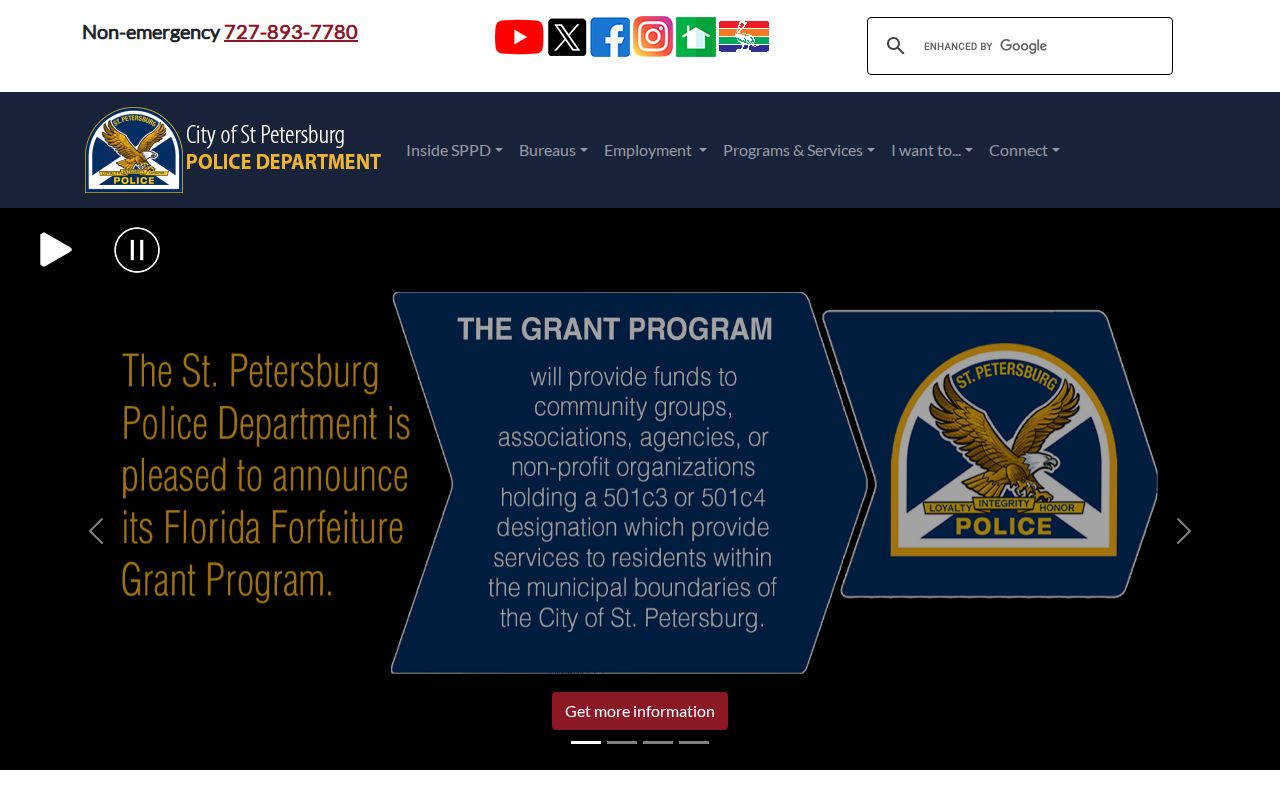
Use the department source for current routes, not a commercial police-report directory.
St. Petersburg Report Costs
SPPD publishes unusually specific fulfillment terms. A mailed report can be expedited with a self-addressed stamped envelope and $1. Photos and DUI video on CD or DVD are listed at $3 per product or medium, plus mailing. Extensive labor averages $28.75 per hour, and voluminous work may receive an estimate before production.
| Item | Published amount or timing |
|---|---|
| Expedited mailed report | $1 plus self-addressed stamped envelope |
| Photo or DUI video media | $3 per product or medium, plus mailing |
| Extensive labor | Average $28.75 per hour |
| Crash processing | Ordinarily 10-14 days |
Ask for an estimate before approving broad video, photo, or evidentiary requests. Narrow date, location, and report-number details can reduce search work.
Booking and Arrest Records in St. Petersburg
SPPD does not create the final county jail record. People arrested by city officers are booked at the Pinellas County Jail, where PCSO assigns the booking number, records intake charges, takes fingerprints and a photograph, and tracks custody. The SPPD narrative explains the city officer's reported facts; the PCSO entry describes custody.
Recent city arrests may appear in PCSO Arrest Inquiry after intake processing. That public tool covers current inmates and people released within 30 days. Older booking material requires a PCSO public-records request. Neither source proves guilt, and the prosecutor may later file a different charge.
St. Petersburg Judicial Building
The St. Petersburg Judicial Building is at 545 First Avenue North. It is a useful south-county court location, but it is not a separate St. Petersburg criminal-court database. The hearing notice and latest docket control the assigned courthouse, judge, and room. Some criminal work is centered at the Justice Center in Clearwater.
The Sixth Circuit Public Defender source illustrates one part of the circuit-level system serving city cases.
City geography does not change the countywide court custodian or the need to check the current docket.
The St. Petersburg Municipal Court File
St. Petersburg does not maintain a stand-alone public criminal court name database. County Court handles misdemeanors, criminal traffic, and qualifying ordinance prosecutions; Circuit Court handles felonies. Both are searched in Pinellas Clerk Court Records View.
| Court system | Sixth Judicial Circuit and Pinellas County Court |
|---|---|
| Case types | Felonies, misdemeanors, criminal traffic, and ordinance cases |
| Lookup | Pinellas Clerk Court Records View |
| Docket contents | Filed charges, hearings, pleas, orders, disposition, and sentence |
| Copies | Clerk online access, records request, or certified-copy service |
Search by name, then confirm identifiers and the case number. The filed court charge can differ from the SPPD or booking charge.
SPPD Crash Report Timing
SPPD says crash reports ordinarily need 10 to 14 days for processing. Florida also places a 60-day access restriction on crash reports, so a requester may have to establish an allowed relationship during that period. Ordinary public-record rules should not be assumed to override that special limit.
If a report is still active or contains exempt material, the city may delay production or release a redacted copy. Ask which part is unavailable and whether the remainder can be produced. A later follow-up may be appropriate after investigative or statutory limits change.
A crash report request should include the collision date, location, report number when known, and the requester's qualifying relationship during the restricted period. Photos, video, dispatch material, and the written crash report may be separate products. Naming the precise item prevents a request for one record from becoming a costly search across several SPPD evidence systems.
How St. Petersburg Records Reach the County
A city officer creates the incident and arrest narrative. PCSO then creates the booking after jail acceptance. The State Attorney decides what to file, and the Clerk records the court events and outcome. Fingerprints and reported dispositions also feed Florida's central repository.
Record flow: St. Petersburg PD › Pinellas County Courts › Florida Department of Law Enforcement
Use SPPD for the city report, PCSO for recent custody, and the Clerk for the prosecution. FDLE CCHInet offers a paid statewide name-based history, but it is not fingerprint-confirmed and may lag a local disposition.
St. Pete Stat and Eagle Eye
SPPD publishes St. Pete Stat performance measures and dated news releases. Those sources help place agency activity in time, but a citywide count is not a person's criminal history. Always note the reporting year and coverage when using local crime figures.
Eagle Eye is a separate community camera-registration program. Owners confidentially register camera availability, and detectives may later ask for footage. Registration does not grant police automatic access to a private camera. It is an investigative lead program, not a public defendant or arrest database.
The Census QuickFacts comparison identifies St. Petersburg as Pinellas County's largest city.
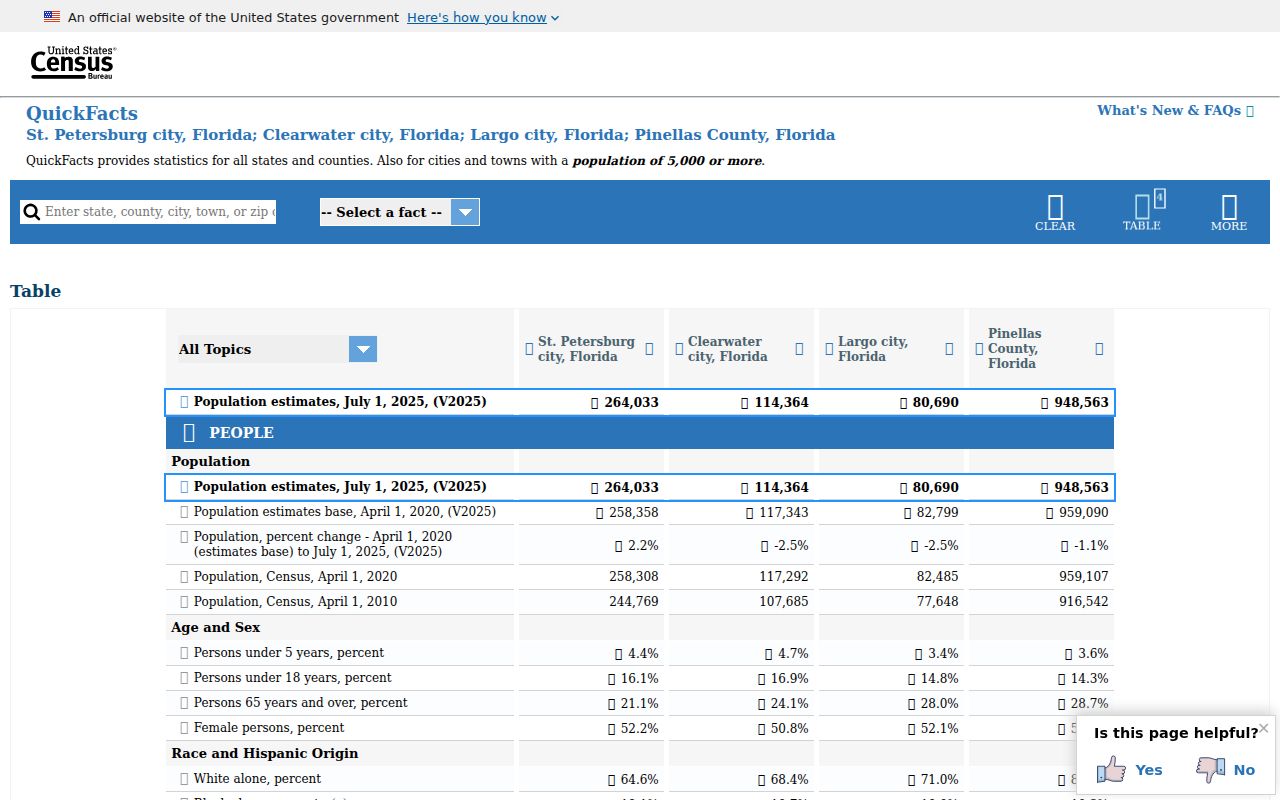
Population context helps explain records volume without turning demographic data into a claim about any individual.
Federal Records From St. Petersburg
A federal case does not appear in the Pinellas Clerk index. Use PACER for federal dockets and the Middle District of Florida for the relevant court. PACER may charge according to its current fee policy.
The official PACER source shows the federal access route.
For federal custody rather than a docket, use the Bureau of Prisons locator.
The BOP Inmate Locator covers federal custody and releases within its data limits.
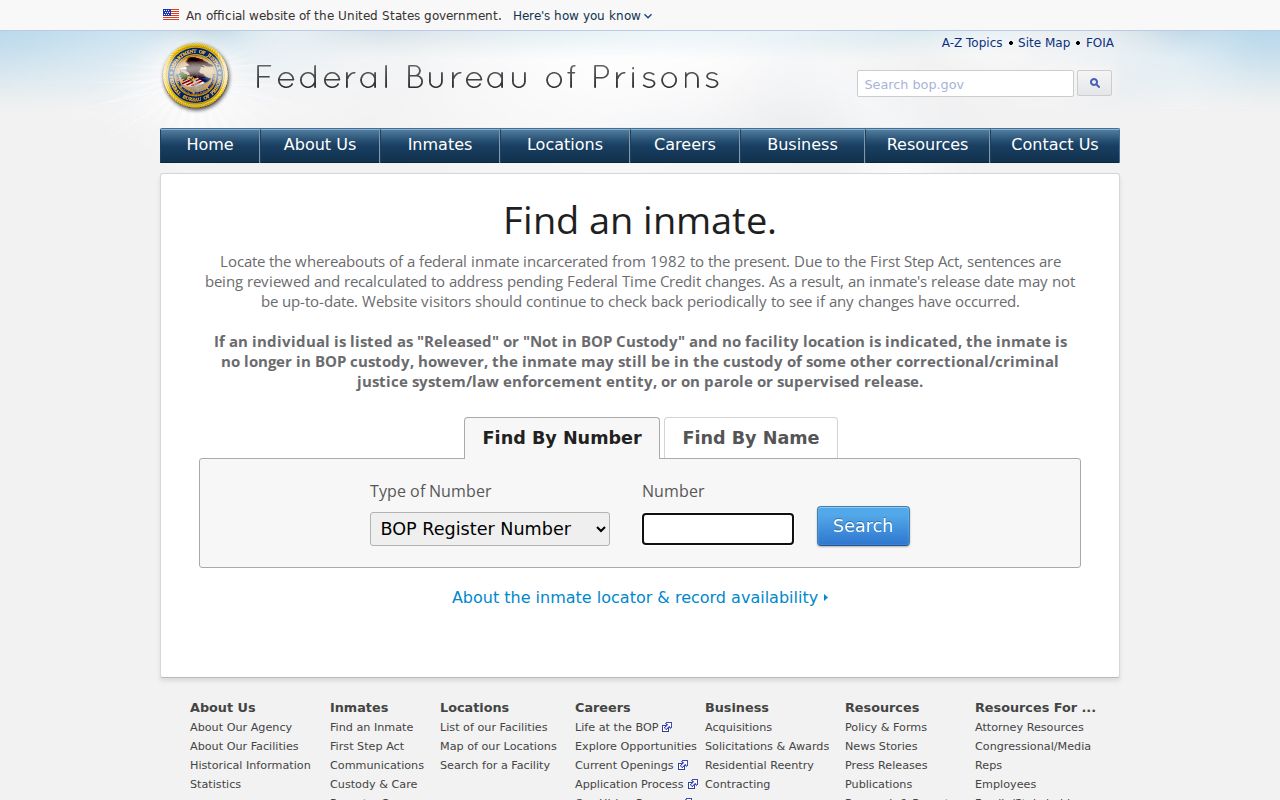
Neither federal source replaces SPPD, PCSO, or Pinellas Clerk records for a local prosecution.
St. Petersburg Record Access Rules
The Florida Public Records Law and article I, section 24 of the Florida Constitution generally support inspection of nonexempt government records. SPPD may still redact protected victim details, active-investigation material, personal identifiers, confidential juvenile information, and other statutory exemptions.
Key statutes:
Chapter 119 establishes Florida's public-record framework.
Section 943.053 governs dissemination of criminal justice information.
Section 943.056 gives a person a route to review and challenge their own state criminal history.
A city request can be anonymous in many ordinary situations, though delivery requires a contact route and restricted crash access can require eligibility details.
Resolving a St. Petersburg Record Gap
When an expected record is absent, start with the event stage. A new SPPD report may still be active, under review, or awaiting redaction. A person arrested in St. Petersburg may not appear in PCSO Arrest Inquiry until jail intake is complete. After release, the public booking entry ages out at 30 days. A court case may not exist until the State Attorney files charges, and an FDLE history can lag the Clerk's disposition.
Use the identifiers from the source that does exist. Give SPPD the report number, event date, time, and location. Give PCSO the booking number or enough identity details to distinguish the person. Give the Clerk the full case number and exact docket document. If a Florida criminal history still lacks the Pinellas outcome, request a certified disposition and follow FDLE's personal review and challenge procedure. Each custodian can address its own record; no city counter can correct all layers.
Sealing and expunction can also explain an empty public search, but absence alone is not proof of either. Florida law protects juvenile information, sealed or expunged records, victim data, and other exempt material. Ask whether a responsive record exists and whether a cited exemption or court order limits release. That question is more useful than asking staff to confirm details they cannot lawfully disclose.
For older St. Petersburg history, separate a police report request from a court search. SPPD remains the source for its narrative, while Pinellas Clerk Court Records View remains the source for filed charges and disposition. That division holds even when the city event occurred near the St. Petersburg Judicial Building or the jail booking happened miles away in Clearwater.
A broad request for every report tied to a common name can create delay and extensive labor charges. Narrow the request with an incident date, address, report number, and the person's role in the event. Specify whether an electronic copy is acceptable and whether certification is needed. If SPPD sends an estimate, review its scope before approving production. The published average labor rate makes a clear request especially useful.
Do not substitute city news releases or St. Pete Stat totals for an individual record. News releases summarize selected events, and performance measures aggregate agency work. They can help confirm when an initiative or public event occurred, but the underlying SPPD report, PCSO booking, or Pinellas docket remains the official record for a specific matter.