
Match Largo Record Numbers
Save the Largo Police report number, PCSO booking number, and Pinellas court case number as separate keys. Linking those identifiers is more reliable than matching a common name. It also helps a custodian understand which part of the event needs a copy, clarification, or correction.
Confirm Largo Agency Jurisdiction
Largo's postal boundary does not prove which agency wrote a report. Read the agency name on the booking or case file before requesting the city narrative.
Largo Record Relief Sources
FDLE's criminal-history access explanation sets out the main Florida products and their different scopes.
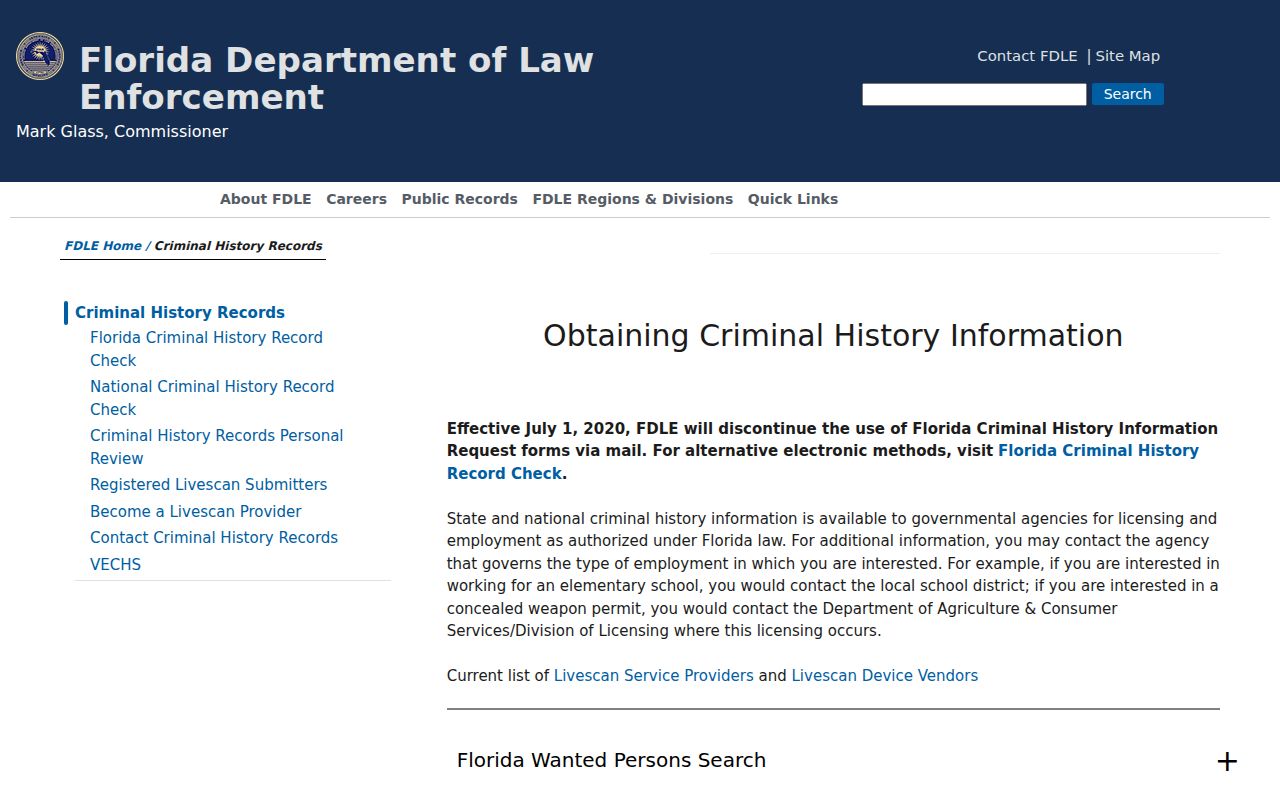
That agency source helps a Largo requester choose between a public name search and personal fingerprint review. Florida's court-ordered sealing statute explains the remedy that blocks ordinary public access while preserving authorized access.
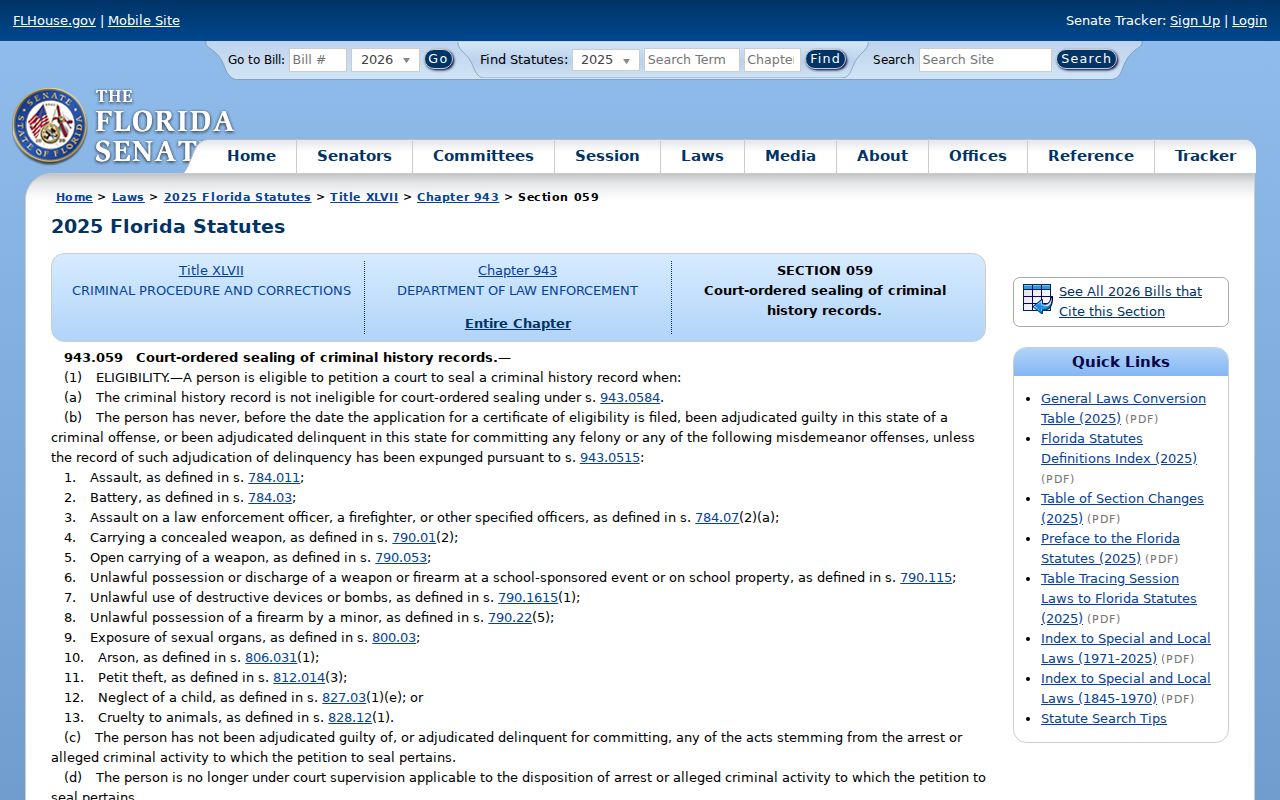
Sealing is distinct from the remedy described in Florida's court-ordered expunction statute.
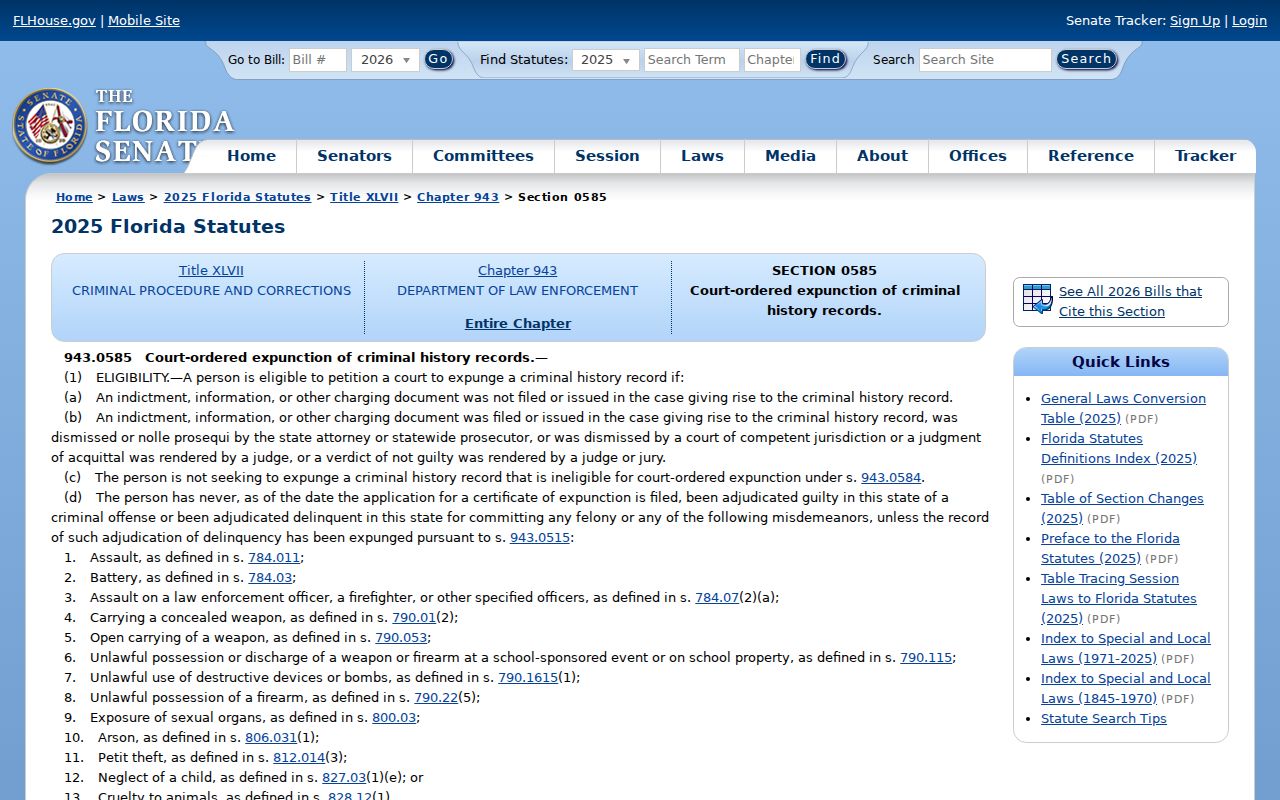
Both sources show why a dismissed Largo case should not be assumed to vanish automatically from police, jail, court, and repository systems.
Largo Criminal History Checks
Choose a starting point by record type. A Largo incident or offense report belongs with Largo Police. A booking created after transport to the county jail belongs with PCSO. A filed misdemeanor or felony belongs in the Pinellas Clerk case system. FDLE adds reported events from across Florida, but its public name search is not a certified fingerprint match.
Bring the exact report or case number when possible. If it is unknown, use the person's full legal name, middle name, event date, location, and date of birth where the portal lawfully permits it. Similar names can otherwise return the wrong case.
- Confirm that Largo Police, rather than PCSO or another city agency, handled the event.
- Request the Largo Police report through the city's current official public-record channel.
- Search PCSO Arrest Inquiry for a current or recently released jail booking.
- Search Pinellas Court Records View for the filed charge and final disposition.
- Use FDLE CCHInet or fingerprint personal review when Florida-wide scope is required.
Largo's Mid-County Record Route
Largo sits close to two county landmarks that can blur agency roles. PCSO headquarters is at 10750 Ulmerton Road in Largo, while the principal criminal Justice Center and jail sit nearby on 49th Street North. Physical proximity does not merge the records. Largo Police remains the custodian of its own incident narratives, PCSO keeps jail booking data, and the Clerk controls the criminal case file.
This distinction is useful when a record request reaches the wrong counter. Ask which badge or agency appears on the report, arrest paperwork, or docket. The postal city alone cannot settle jurisdiction in a county with many incorporated municipalities, unincorporated areas, and contract-service communities.
Records at Largo Police
The Largo Police Department is at 201 Highland Avenue. The research confirms that the department maintains Largo incident and offense records and accepts Chapter 119 requests through official city channels. Its current standardized postal address, counter hours, records phone, and copy charges should be confirmed on the department page before an in-person visit.
Do not fill gaps with another city's schedule or rates. A useful Largo request states the record type, event date and time, location, involved name, report number, desired format, contact route, attachment, and whether certification or a cost estimate is sought. Those details help staff locate the record and identify any exempt content.
Largo Police Department
201 Highland Avenue
Largo, Florida
Confirm records hours and phone on the official department page.
Write a Precise Largo Request
Florida does not require a special form or a statement of purpose for an ordinary public-record request. Still, a broad demand can require more search, review, and redaction time. Give a short date range and describe whether the request seeks an offense report, call record, photo, video, or other city police material.
A records custodian can charge lawful duplication costs and a reasonable special-service charge when extensive staff or technology work is needed. Ask for an estimate before costly work begins. If the estimate is high, narrow the date, address, record type, or event. A precise request is easier to route and less likely to capture unrelated protected information.
| Request Detail | Use |
|---|---|
| Report number | Identifies the exact Largo file |
| Date, time, place | Narrows the event |
| Involved name | Helps match records when lawful |
| Format and delivery | Guides fulfillment |
| Certification or estimate | Signals the type and likely cost of copy |
Booking and Arrest Records in Largo
A Largo Police arrest ordinarily moves to the Pinellas County Jail. Largo keeps the incident narrative and supporting city evidence. PCSO then creates the booking number, intake photograph, intake time, initial charge and bond data, arresting agency field, custody status, housing information, and release entry. These related records serve different purposes.
The official PCSO Arrest Inquiry shows current inmates and releases within the last 30 days. Search broadly at first, then compare identifying details and the arresting agency. When the person was released more than 30 days ago, ask PCSO for the older booking record. Largo Police still handles the incident report even after the booking display ages out.
Neither result establishes guilt. The prosecutor can decline a count or file a different charge, so the Clerk case controls the judicial outcome.
Largo Report, Booking, and Case
A complete view of one Largo event can require three official files. The city report explains what officers recorded. The county booking proves the custody episode and states the allegations accepted at intake. The court case shows filed counts, hearings, orders, pleas, and the final disposition.
| File | Custodian | Best Evidence |
|---|---|---|
| Incident report | Largo Police | Event narrative and initial allegations |
| Booking | Pinellas County Sheriff's Office | Custody, bond, and release |
| Criminal case | Pinellas Clerk | Filed charges and outcome |
Names alone can mislead. Use the report number, booking number, and court case number to connect records with more confidence.
The Largo Municipal Court File
Largo has no separate criminal case portal. County Court hears qualifying ordinance cases, misdemeanors, and criminal traffic. Circuit Court hears felonies. Both are part of the Sixth Judicial Circuit and are searched through the Pinellas Clerk Court Records View.
Begin with a case number. A party search can use legal surname, first and middle name, and date of birth where available. Read each charge row and the chronological docket. A bond entry is not a disposition, and a booking description may not match the later information filed by the State Attorney.
| Court Name | Pinellas County Court or Circuit Court of the Sixth Judicial Circuit |
|---|---|
| Case Types | Ordinances, misdemeanors, criminal traffic, and felonies based on court level |
| Lookup Channel | Court Records View, Clerk service counter, or records request |
| Docket Content | Charges, hearings, events, orders, disposition, sentence, costs, and public images |
| Copies and Fees | Clerk schedules govern staff copies, retrieval, and certification |
Largo Cases at the Justice Center
The Pinellas County Justice Center at 14250 49th Street North, Clearwater, is the practical hub for principal criminal operations. Criminal Court Customer Services, courtrooms, the State Attorney, and Public Defender functions are on the campus, with the county jail next door. The Clerk's main number is 727-464-7000.
A Largo case may be assigned elsewhere, so the latest docket and hearing notice control. Sixth Circuit facilities also include the Clearwater Historic Courthouse and St. Petersburg Judicial Building. Confirm the division, judge, room, and address before travel. Security screening and court rules apply at public entrances.
How Largo Records Reach Florida
When Largo Police makes an arrest, the city report begins the chain. PCSO adds fingerprints and booking-event data at the jail. Prosecutors decide what to file in County or Circuit Court, and the Clerk records the docket and outcome. Reported arrest and disposition data then flow to FDLE's Computerized Criminal History repository.
Record flow: Largo Police › Pinellas County Courts › Florida Department of Law Enforcement
One system can lag another. A Clerk disposition may be entered before FDLE receives or matches it. Compare agency, dates, charge, case number, and outcome. The office that owns the wrong field should correct its own file; FDLE's personal review and challenge route addresses repository errors.
Largo and FDLE Record Scope
A city or county search is only one slice of criminal history. FDLE CCHInet is the public Florida name-search product. It costs $24 per search plus a $1 card-processing fee. A search is charged even when no useful match appears, and several people can share the same name.
Someone reviewing their own record can use FDLE's fingerprint-based personal-review process for stronger identity matching. Approved Livescan providers set separate capture fees and must use the correct routing code. A Largo police report or Pinellas court search can help explain a local event, but neither substitutes for the scope of a Florida repository review.
- Name search
- A demographic query that may produce possible matches rather than fingerprint proof.
- Personal review
- A fingerprint-linked process for viewing and challenging one's own Florida history.
- Disposition
- The court result for a charge, such as conviction, dismissal, acquittal, or nolle prosequi.
Largo Record Access Rules
Largo police files fall under the Florida Public Records Law, chiefly Chapter 119 and the constitutional right in article I, section 24. Access is broad but not absolute. Active investigative information, victim and minor data, protected addresses, personal identifiers, juvenile files, and sealed or expunged material may be withheld or redacted.
Key Statutes:
Florida Statutes Chapter 119 requires access to nonexempt public records and permits lawful copy and extensive-use charges.
Florida Statutes section 119.071 protects specified investigative information, identities, and personal data.
Florida Statutes section 943.053 controls FDLE dissemination of criminal-history information.
Court records also follow Florida Rule of General Practice and Judicial Administration 2.420. A city request cannot override a sealing order or obtain a confidential juvenile case.
Largo Crime Data Needs Context
Use a current Largo Police report, FDLE's Florida Statistical Analysis Center, or the FBI Crime Data Explorer for official city crime figures. State the reporting year and coverage. The shift to incident-based reporting changed definitions and participation, so totals from unlike systems or partial years should not be placed side by side as a trend without checking the method.
Crime statistics describe reported events, not a person's criminal history. The city report, PCSO booking, Clerk case, and FDLE repository serve that person-level record task. This separation is especially important when a map or annual total is mistaken for proof about an individual.
When Largo Bookings Age Out
If PCSO Arrest Inquiry no longer shows a Largo release, use the Sheriff's public-records route for the older booking. Supply the name, approximate arrest date, booking number if known, and Largo Police as the arresting agency. Keep the city incident request separate because PCSO does not become the custodian of Largo's narrative merely by operating the jail.
Then use the Clerk docket for the outcome. A dismissed case can leave a historically accurate arrest or booking unless the record qualifies for sealing, expunction, or automatic sealing. Florida's remedies have distinct rules, and dismissal by itself does not promise removal from every public source.