
Pinellas County Sex Offender Checks
The Florida Sexual Offenders and Predators Registry is the main official source for a Pinellas County sex offender check. FDLE manages the statewide public interface. PCSO handles county registration and re-registration at the location and schedule published through current official channels.
A registry listing concerns qualifying registration offenses. It is not a complete criminal history, and FDLE does not present public placement as an individualized prediction of future conduct. Read the designation, offense, residence source, verification data, and present status together.
Florida Registry Categories Explained
Florida does not publish a simple Tier I, II, or III risk score. Its principal labels are sexual offender under Florida Statute 943.0435 and sexual predator under section 775.21. A predator is a court-designated statutory category. An offender is a person who meets the listed conviction and registration criteria. Neither label should be casually converted into a personal risk rating.
- Sexual offender
- A statutory registration category under section 943.0435.
- Sexual predator
- A court-designated category governed by section 775.21 and community-notification rules.
- Absconded or noncompliant
- A status indicating an address could not be verified or a reporting duty was not met.
- Transient address
- Location information used when a registrant lacks a permanent residence.
Florida Registry Searches
A county-wide Pinellas County offender list does not require a name. Choose Pinellas in the county field and leave names blank. For a known person, partial names can broaden matching. Status and type controls help readers separate released, supervised, confined, absconded, or other displayed groups.
- Open the official FDLE search and choose a name or location method.
- Select Pinellas County for a county-wide result, or add a city or ZIP code for a smaller area.
- Apply offender type or status only when those distinctions matter.
- Review likely results using aliases, physical details, address information, and current photographs.
- Open the profile and check designation, status, offense, verification source, and tracking options.
| Field | Type | Use |
|---|---|---|
| First/last name | Text | Partial names permitted |
| City, county, ZIP | Location | At least one name or location field overall |
| Offender type | Dropdown | Both or offered offender/predator filters |
| Offender status | Multi-select | Absconded, confined, released, supervised, and other states |
| Aliases/photos | Checkboxes | Expands matching or display |
Pinellas Registry Search Results
The FDLE registry interface shown here demonstrates the official name and location controls.
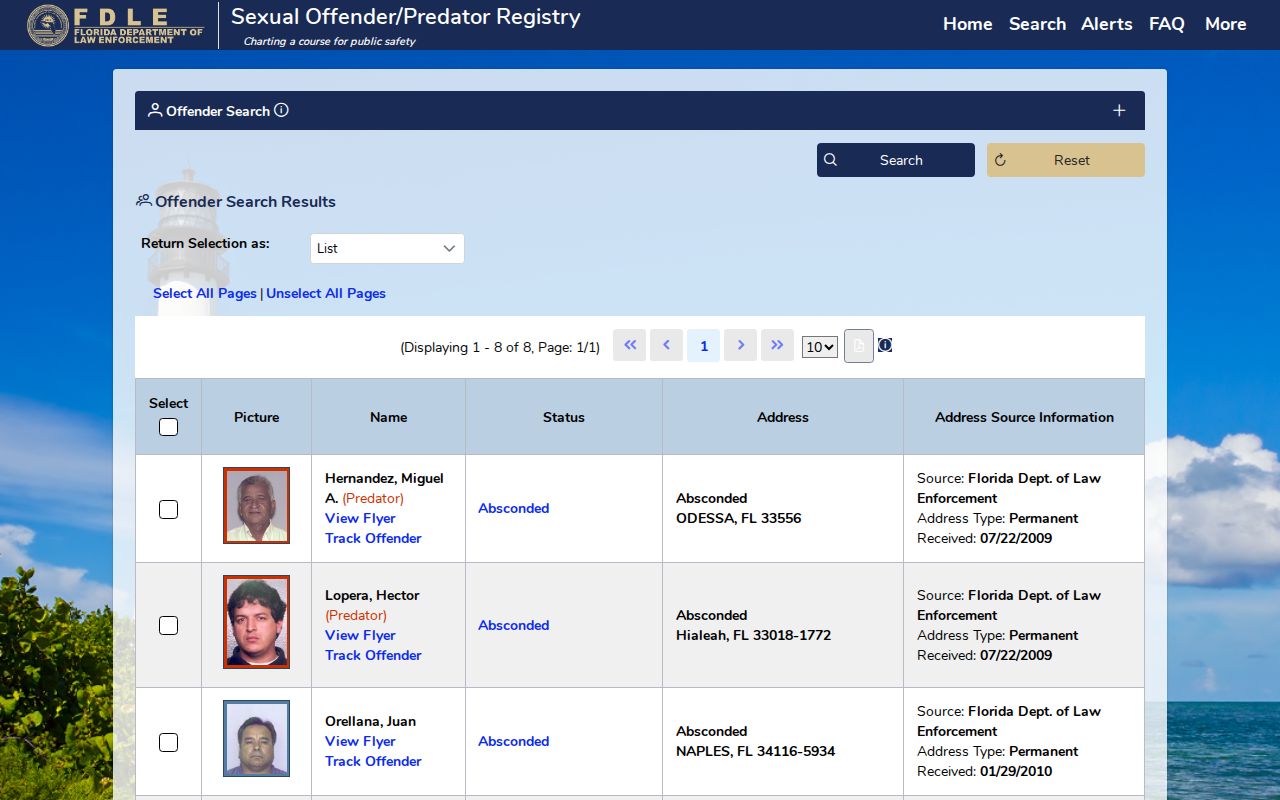
The result layout should be used as a route to an official profile, not as a basis for confrontation or public labeling beyond what the record states.
Selected records can produce a printer-friendly PDF, limited to 25 at a time, while public county and state files are also offered as CSV. Separate official routes cover neighborhood or address, campus, and Internet-identifier searching.
Registry Profiles: What They Show
A Florida registry profile joins identity, address, qualifying offense, status, and registration facts. It may also display past photos and several address types. Private or restricted data remains outside the public profile.
| Identity | Legal name, aliases, sex, race, date of birth or age, and physical description. |
|---|---|
| Designation | Sexual offender or sexual predator, plus current status. |
| Addresses | Permanent, temporary, and transient locations with source or verification details. |
| Identifiers | Scars, marks, tattoos, vehicles, vessels, and public Internet identifiers when authorized. |
| Offense | Qualifying law, jurisdiction, conviction date, sentence, release, and victim age category when public. |
| Supervision | Incarceration or supervision status and registration details. |
| Controls | Printable flyer and Track Offender options. |
The FDLE registry FAQ shown here explains alerts, profile data, and reporting.
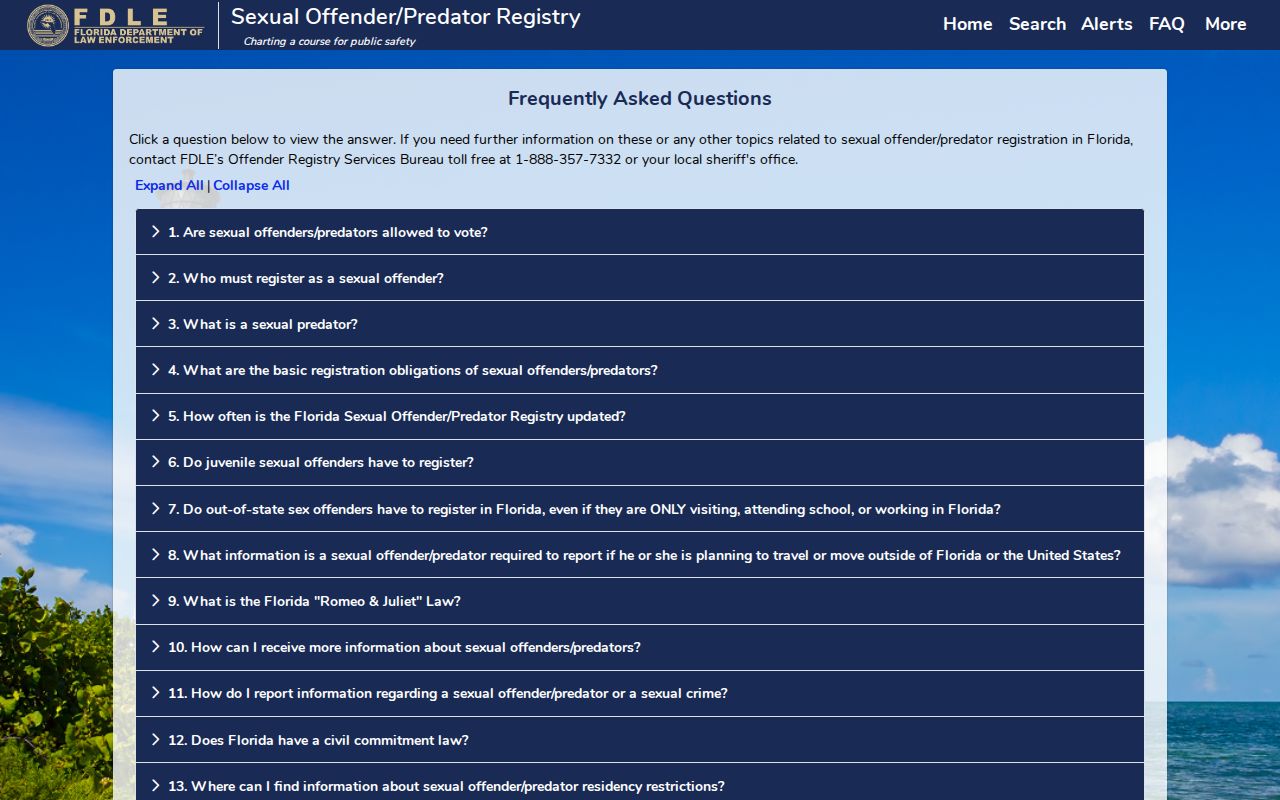
That guidance helps distinguish a published profile fact from an assumption the registry does not make.
Pinellas Offender Address Alerts
Florida Offender Alert can email a subscriber when a tracked registrant moves or when a registrant moves within a selected distance of an address. This is more useful for ongoing Pinellas County community awareness than repeating the same manual search. Use an address that matters to the subscriber and review each notice against the current official profile.
Address information can change quickly because a permanent, temporary, or transient residence may be reported, verified, corrected, or replaced. A profile's address source and verification details matter. An alert is a prompt to review the official entry, not a substitute for it.
Registration Levels and Duties in Florida
Florida's two core public categories carry long registration periods and recurring in-person duties. Frequency can depend on the offense, designation, and current law.
| Florida category | Public meaning | Duration and verification |
|---|---|---|
| Sexual predator, §775.21 | Court-designated statutory category with notification | Generally lifetime; re-registration may be quarterly |
| Sexual offender, §943.0435 | Listed conviction and registration criteria | Generally lifetime; usually semiannual, quarterly for specified offenses |
| Absconded/noncompliant | Location or duty not verified | Report useful location facts to law enforcement; never confront |
The sexual predator law shown here supplies the governing designation and notification rules.
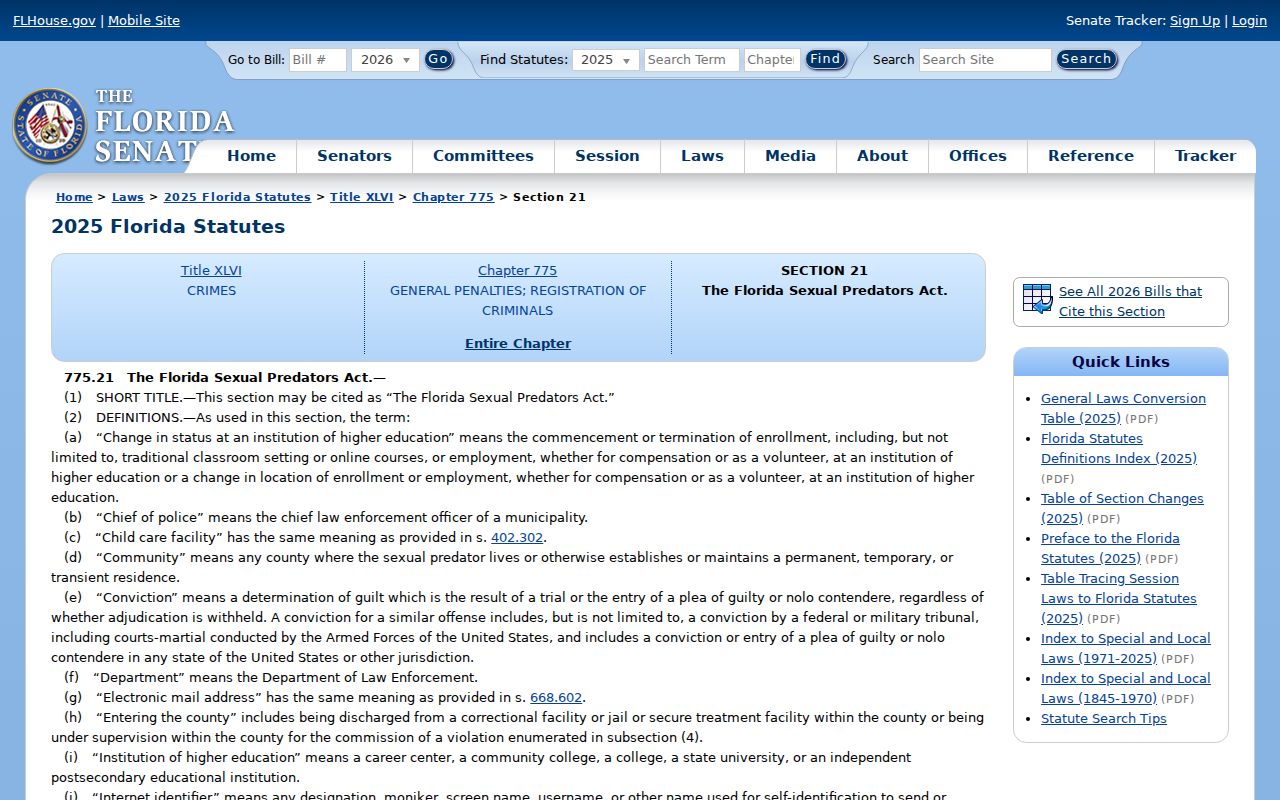
The statute confirms why the public predator label is a legal category rather than an informal tier.
Pinellas Re-Registration Duties
Pinellas registrants report through PCSO at the county-designated registration location and according to the current FDLE county re-registration list. Confirm the office and time with PCSO or FDLE at 1-888-357-7332 before appearing. Residence, vehicle, work or vocation, school, and Internet-identifier changes have statutory deadlines.
The sexual offender statute shown here details the registration framework.
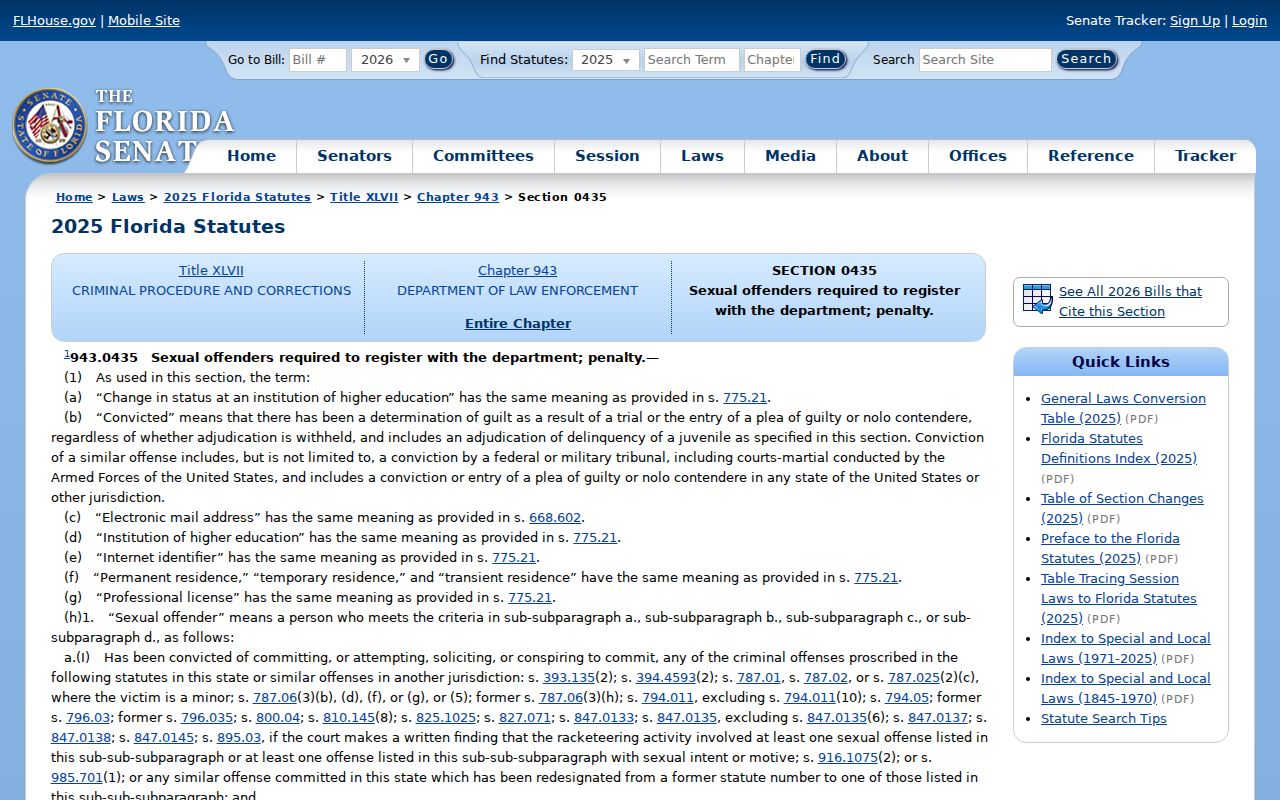
Current statute text and official re-registration instructions should control when a deadline or reporting location matters.
The Narrow 25-Year Petition
Registration is generally for life unless a statutory removal route, pardon, or qualifying conviction set-aside applies. Section 943.0435 includes a limited petition route after at least 25 years from release from confinement, supervision, or other sanction. The person must have no intervening arrest, and listed serious offenses are excluded.
This is not automatic removal and does not create a federal SORNA tier calculation. A court must evaluate eligibility under the statute. The mere passage of 25 years does not by itself erase a Pinellas County registry entry.
Cross-State Offender Searches
The National Sex Offender Public Website is the official cross-state layer when an address, move, or history crosses Florida's border. It searches participating public registries through one federal interface. Return to the source jurisdiction's profile for its current legal label, verification data, and reporting detail.
The national search interface shown here is useful when a Pinellas County-only search is too narrow.
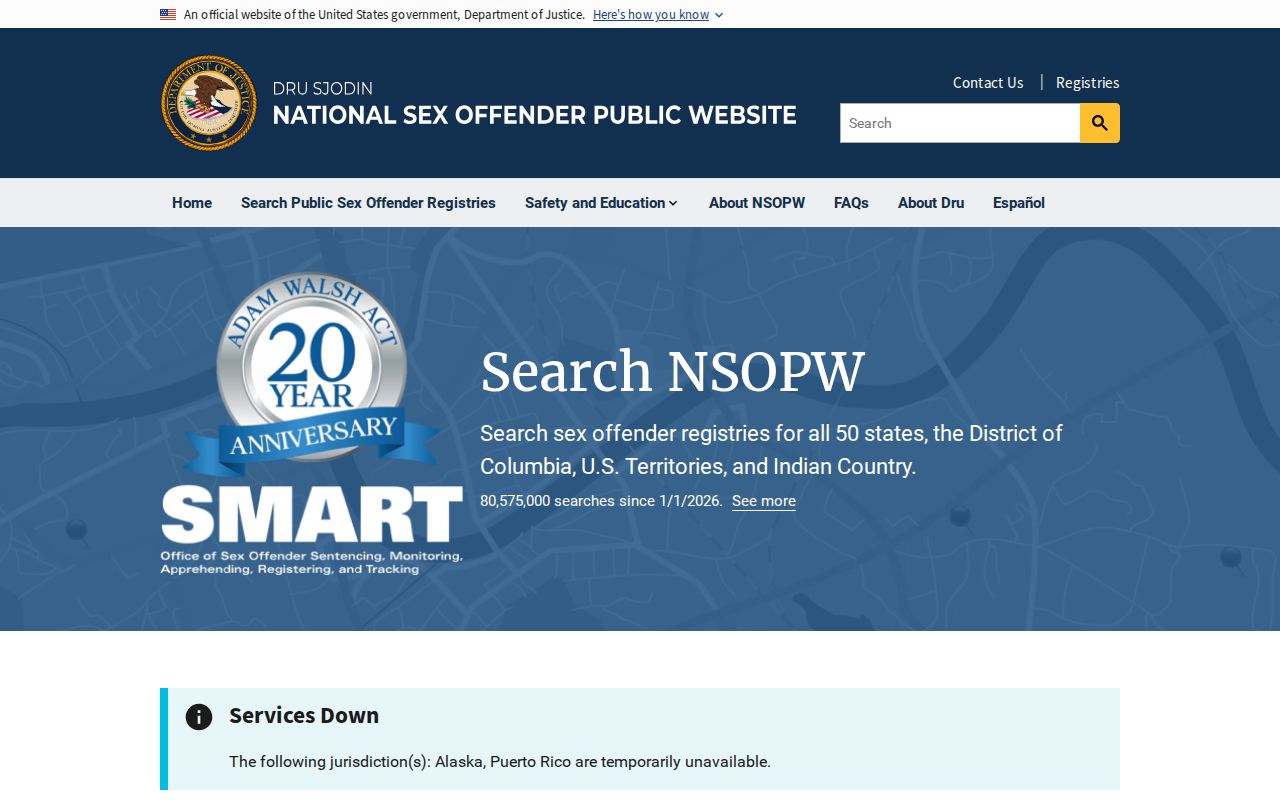
NSOPW broadens geographic coverage but does not replace the richer Florida profile for a Florida registrant.
Report Suspected Pinellas Violations
Send suspected inaccurate registry data to FDLE at sexpred@fdle.state.fl.us. Report suspected noncompliance or a useful location for an absconded person to law enforcement. Provide facts such as the observed address, date, vehicle, or official profile link. Do not investigate, approach, follow, or publish private claims.
Statuses such as absconded, confined, released subject to registration, FDC supervised, DJJ supervised, and U.S. Probation supervised describe different current conditions. Read the exact status before deciding what information may help authorities.
Using Registry Information Lawfully
Registry information exists for public safety and community notification. It must not be used to harass, threaten, intimidate, discriminate, or encourage vigilante acts. Verify an apparent match through the official profile and report concerns through FDLE or law enforcement.
Misuse warning: Florida Statutes 775.21 and 943.0435 prohibit misuse of registry information to threaten, intimidate, or harass; unlawful acts can carry criminal penalties.
FDLE directs users to make their own safety assessment while recognizing that the listing is based on registration offenses, not a complete criminal history. Community awareness should remain factual, restrained, and tied to lawful reporting.
Reading Pinellas Registry Status Filters
Status filters prevent several different situations from being collapsed into one label. Released subject to registration means the person is in the community and remains bound by registration duties. Supervised by FDC, DJJ, or U.S. Probation identifies the displayed supervision authority. Confinement or civil commitment indicates that the person is not simply listed at a community residence. Deceased and deported are separate interface states. Absconded means address or reporting compliance could not be verified, and it calls for factual reporting to law enforcement rather than an attempt to locate or confront anyone.
A Pinellas County search can include aliases and small thumbnail images, which may help distinguish similar names. Physical descriptors, scars, marks, tattoos, vehicles, and prior photos can support identity matching, but every field should be read with its date and source. An old photograph or prior address does not override the current status and verification information. Likewise, a transient address does not mean that no location data exists. Florida publishes permanent, temporary, and transient address information as the governing law permits.
Profiles may list a qualifying offense, statute, jurisdiction, conviction date, sentence or release information, and a victim age category when publication is authorized. Those fields explain why registration applies. They do not provide every arrest, charge, or court outcome in the person's history. For the underlying Pinellas court case, use the Clerk record. For a statewide criminal-history self-review, use FDLE's criminal-history channels. Registry use should stay focused on the public safety purpose for which the data is released.
When Pinellas Registry Data Looks Wrong
FDLE accepts reports of suspected inaccurate registry information at sexpred@fdle.state.fl.us. A useful report identifies the official profile and the specific field in question, such as an address, vehicle, status, or spelling, then supplies the factual basis for review. Suspected failure to register or an absconded person's location belongs with law enforcement. PCSO handles local registration duties, while FDLE maintains the statewide public record, so the correct recipient depends on whether the concern is compliance or displayed data.
Do not treat a discrepancy as permission to investigate a residence, contact a listed person, or circulate an accusation. Address and status fields can change as registrants report moves, temporary stays, vehicles, work, school, or Internet identifiers under statutory deadlines. Official verification takes time. Track Offender and Florida Offender Alert provide lawful ways to follow a profile or an area while the agencies update their systems.
For a move outside Florida, NSOPW can locate the destination jurisdiction's public registry. The source jurisdiction should then be used to interpret its own categories and current status. Florida's offender and predator labels should not be imposed on another state's tier system, just as another state's tier should not be substituted for Florida's legal designation.