
Criminal Court Cases in Pinellas County
Pinellas County uses two trial-court levels within Florida's Sixth Judicial Circuit. Circuit Court hears felonies. County Court hears misdemeanors, criminal traffic cases, and ordinance prosecutions. The Clerk of the Circuit Court and Comptroller keeps both judicial files. They differ from the jail booking and the arresting agency's incident report.
A booking charge can change after State Attorney review. The filed charging document controls the prosecution. Compare the case number, defendant identifiers, filing date, count-by-count charges, and final disposition before drawing a conclusion.
Inside Pinellas Court Records View
The official Pinellas Court Records View is the free county case index. Florida has no single comprehensive public trial-court name search. Guest, registered, and authorized users may see different document access, as the Clerk's access overview explains.
| Search field | Best use | Verify |
|---|---|---|
| Name | Find possible cases | Middle name and birth data |
| Case number | Open one file | Prefix and year |
| Date range | Narrow common names | Filing date |
| Citation | Find criminal traffic | Exact characters |
A missing image may require a higher access level, a clerk request, or may be confidential. It does not prove that no record exists.
Pinellas County Case Record Searches
Start broad, then prove the match with more than a name. Spelling variants can hide a case, while common names can produce false matches.
- Open Court Records View and select the appropriate criminal search.
- Enter a party name or the full case number.
- Narrow results with filing dates, case type, and available identifiers.
- Open the docket and read through the latest event and disposition.
- Request unavailable or certified documents from the Clerk.
For records not supplied in the free view, use the Clerk's GovQA request center. Include the case number and exact document title to reduce staff research and cost.
Pinellas Court File Codes
Pinellas docket terms describe outcomes more precisely than a simple guilty-or-dismissed label. Read each count because one case can contain several results.
- Nolle prosequi
- The prosecutor formally declines to continue a filed charge.
- Withhold of adjudication
- The judge withholds a formal adjudication of guilt, subject to Florida law.
- Dismissal
- The court ends a charge without a conviction on that count.
- Disposition
- The recorded outcome of a charge.
Bond is a release decision, not a disposition. An arraignment entry also does not show the eventual outcome.
What a Criminal Case File Contains
The public case file tracks the prosecution from filing through outcome. Its strongest fields connect the right person, charge, court event, and result.
| Case and court | Number, division, filing date, judge, and status |
|---|---|
| Charging document | Filed counts, statutes, degrees, and amendments |
| Docket | Hearings, motions, pleas, orders, and trial events |
| Disposition | Outcome for each count |
| Sentence | Sanctions, costs, and public supervision terms |
The file may not include the police narrative. Request that from the arresting agency. A certified disposition comes from the Clerk, not the jail.
Certified Pinellas Case Copies
Ask the Clerk for a certified copy when authentication matters. A downloaded image or screenshot is not the same product. The current Clerk fee schedule controls copy and certification charges.
The official fee page shows the current Pinellas court-record cost framework.

Use the live schedule rather than an old quoted fee, and identify the exact docket item whenever possible.
Criminal Case Stages in Pinellas County
A docket becomes clearer when its events are placed in sequence.
Charges Filed → Arraignment → Pretrial → Plea or Trial → Disposition → Sentencing
First appearance and bond can precede the filed information. Arraignment records the response to charges. Pretrial entries include discovery, motions, plea talks, and continuances. The plea or trial resolves liability, and sentencing records the sanction. An appeal later creates a separate review path.
Missing Pinellas Document Images
When a docket entry lacks a document icon, check the Clerk's access-level rules first. Some public material is indexed without a guest-viewable image. Other records need redaction, are older, or must be requested in another format.
The Clerk request center provides a tracked fallback.
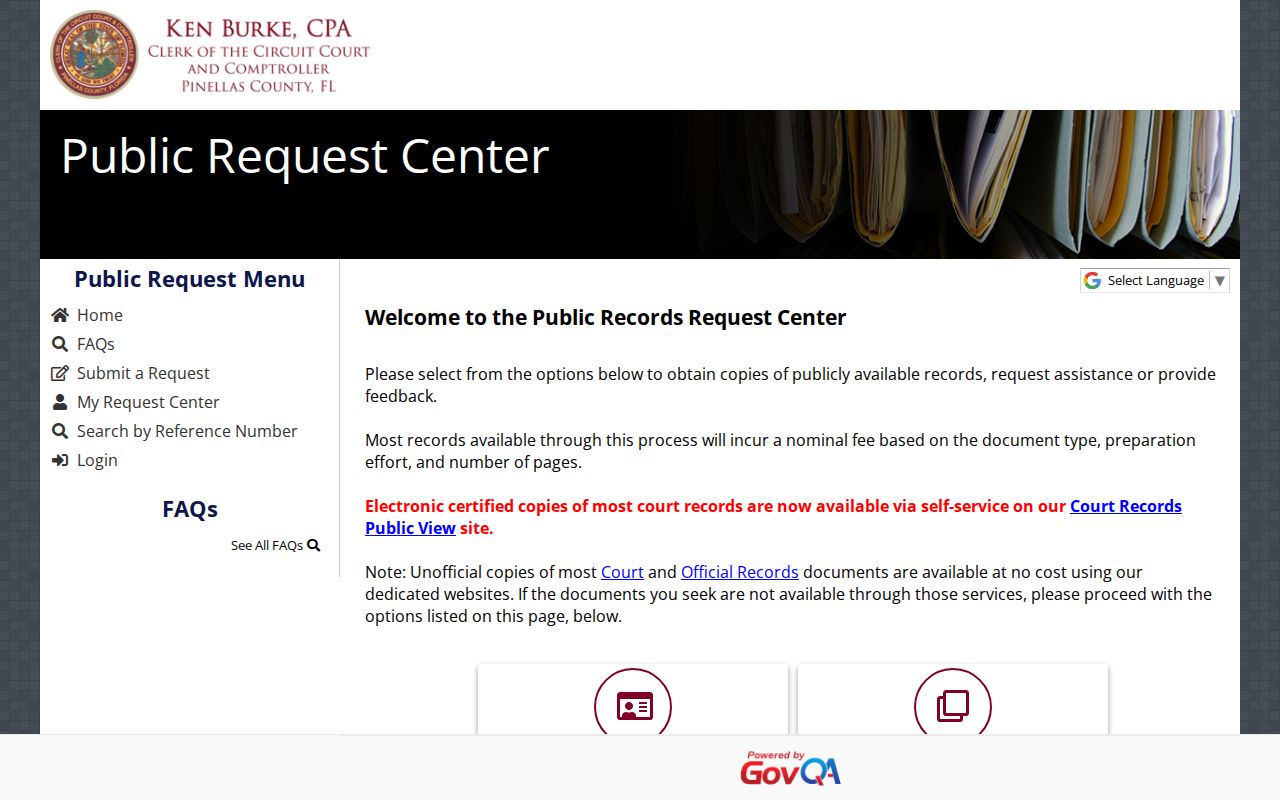
Provide the case number, docket date, and document name. A precise request is easier to locate and price.
Access Rules for Case Records
The Florida Public Records Law and the state constitution favor access, but court files still contain exemptions. Sealed and expunged matters, confidential juvenile records, protected victim data, personal identifiers, and court-ordered confidential material may be removed or redacted.
Access point: A public docket may stop at a sealing order. That does not authorize disclosure of protected later material.
Florida Statutes sections 943.0585 and 943.059 govern expunction and sealing. A blank search result alone does not prove either remedy occurred.
Federal Cases Near Pinellas County
Federal prosecutions do not appear in Pinellas Circuit or County Court. The Middle District of Florida, including Tampa Division matters, keeps those cases. PACER supplies the federal docket layer.
The official district site identifies court locations and access routes.
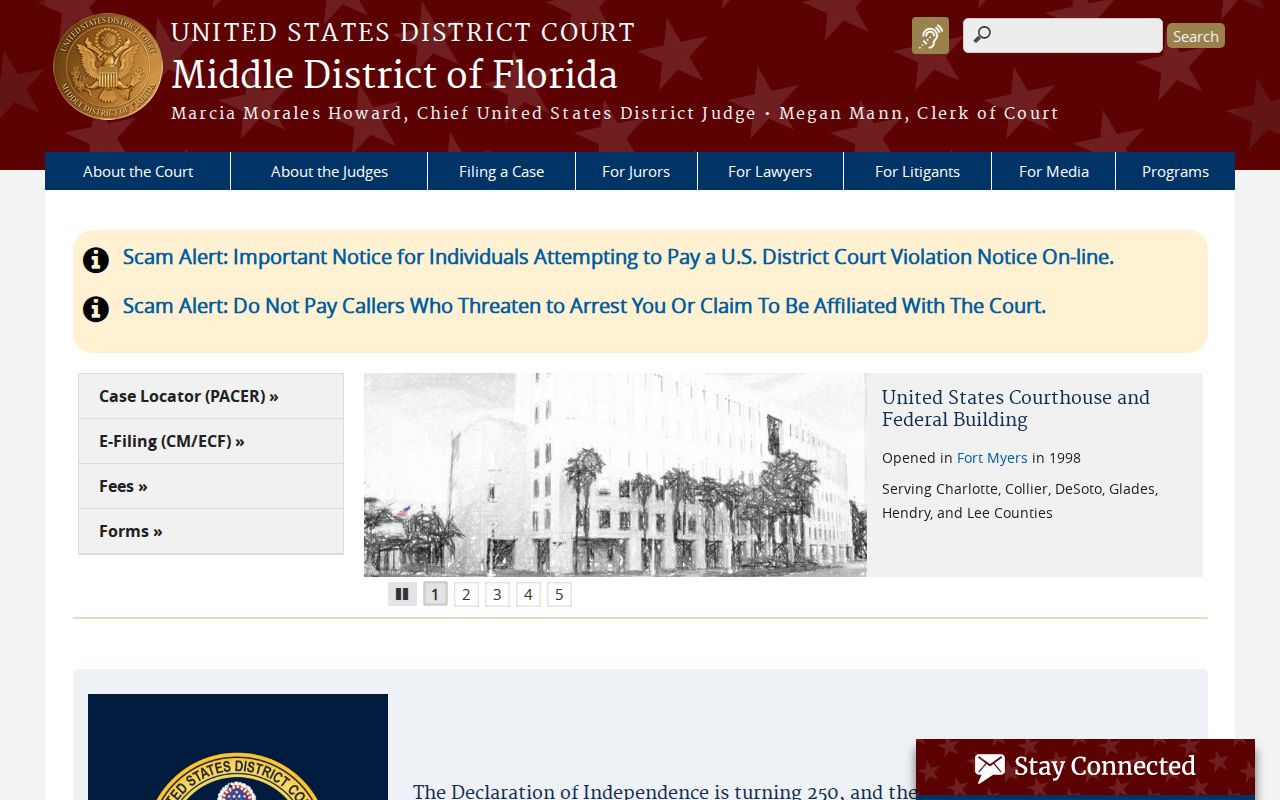
Check the court named on the charging paper before selecting a portal. County and federal indexes do not mirror one another.
Pinellas Courthouse and Clerk Routing
The practical center for Pinellas criminal files is the Pinellas County Justice Center at 14250 49th Street North, Clearwater, FL 33762. The Clerk's criminal customer service, courtrooms, State Attorney, Public Defender, and county jail sit on or beside the same campus. That closeness can mislead visitors. Jail staff maintain booking and custody records; they cannot certify a court disposition. The Clerk maintains the court file; that office does not own an arresting officer's incident narrative.
Other Sixth Circuit sites include the Clearwater Historic Courthouse and the St. Petersburg Judicial Building. Court assignments change. Before traveling, check the latest notice, online docket, judge, division, and hearing room through Sixth Judicial Circuit resources. Visitors should allow time for parking and security screening, bring the full case number, and confirm the correct records counter through the Clerk at 727-464-7000. ADA accommodations and court interpreters support participation, but they do not open sealed or confidential files.
A useful request distinguishes index access, an ordinary copy, and a certified copy. The index helps locate the case. An ordinary copy reproduces an available document. Certification adds the Clerk's official authentication. If a Pinellas County criminal case involves several counts, name the exact disposition, judgment, or sentencing document needed instead of asking for the entire file. The tighter scope can reduce duplication and staff-research charges while producing a more useful record.
Public entrances use security screening, and posted court rules control electronics and recording. A records-counter visit is not the same as attending a hearing. Bring identification only when the requested service requires it, plus the complete case number and a list of documents. Confirm whether electronic delivery will meet the need before paying for paper copies. For a historical file or a record that cannot be found online, give the Clerk an approximate filing year and defendant details so staff can identify the correct archive.
Filed Charges Versus Booking Charges
An arrest starts one record stream, but the prosecutor controls the filed case. After reviewing reports and evidence, the State Attorney may file the same charge, amend its degree, add or drop a count, or decline prosecution. That is why a Pinellas booking label can differ from the Clerk's charging document. Neither inconsistency alone means the database is wrong; the entries describe decisions made at different stages.
For a careful self-review, preserve the booking number, police report number, and court case number. Match dates and identifiers across all three. Then read the court docket to its last disposition and sentence entry. If FDLE later shows no court outcome, obtain a certified Pinellas disposition and use Florida's personal review and challenge route under section 943.056. The Clerk can certify its own record, but only FDLE can correct the state repository after the required review.
The timing matters as much as the label. PCSO can publish an intake charge before the prosecutor completes review. The Clerk may then open a case under a different count or degree. Later docket entries can record an amended information, plea to another count, acquittal, dismissal, or sentence. A sound Pinellas County court case lookup records that sequence instead of merging each stage into one fixed accusation.
Case status also deserves care. An open label can mean a prosecution remains pending, a post-judgment obligation is unresolved, or the database has not yet reflected the newest order. Read the dated docket entries and obtain the judgment or disposition document when the status text is unclear. For an appeal, check whether the trial docket notes a notice of appeal and then follow the appellate case number. Trial and appellate records answer different questions even though they arise from the same Pinellas prosecution.